Web Performance Optimization (WPO) has evolved from a technical specialty to a must-have skill for web professionals. With Google’s Core Web Vinals directly impacting search rankings, and users expecting near-instant loading times, mastering WPO principles is no longer optional—it’s critical for career advancement in web development, digital marketing, and UX design.
Understanding Core Web Vitals: The Foundation of Modern WPO
Google’s Core Web Vinals provide a standardized way to measure user experience across the web. These metrics have become fundamental ranking factors, making them essential knowledge for anyone working with websites.
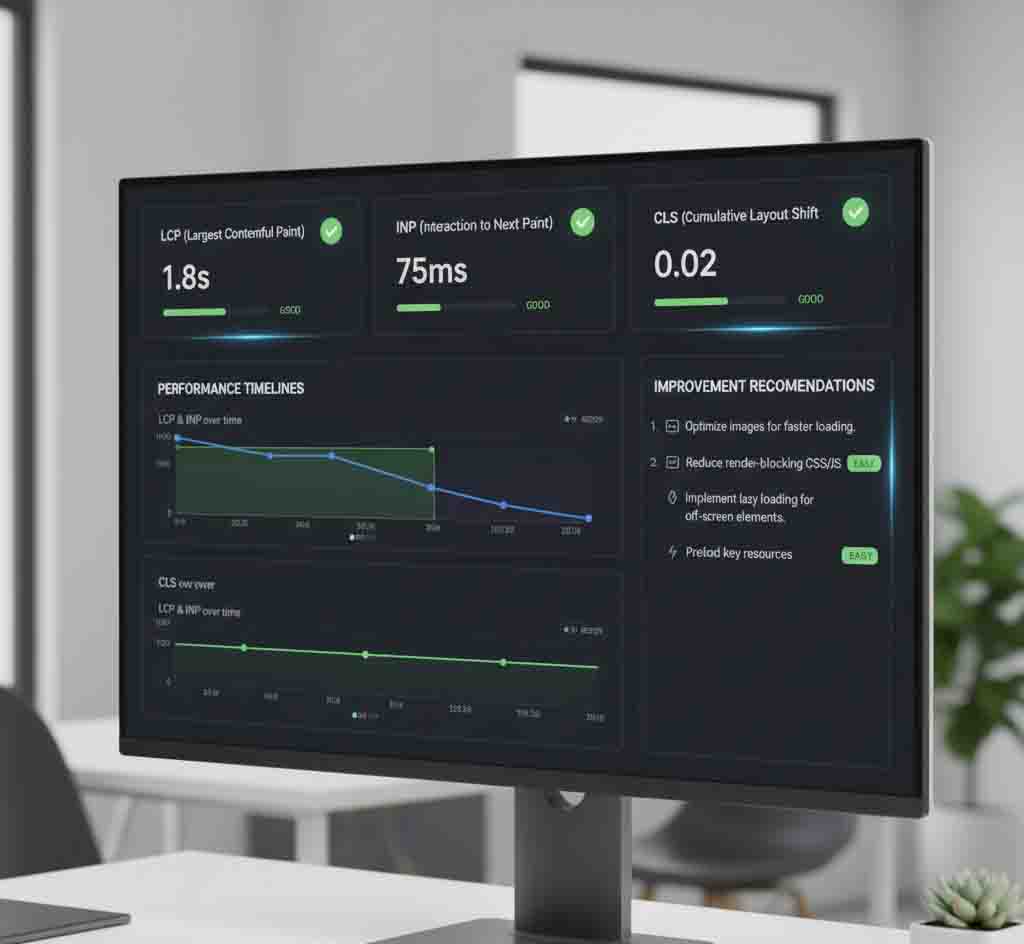
Largest Contentful Paint (LCP) measures loading performance. For a good user experience, LCP should occur within 2.5 seconds of when the page first starts loading. Slow LCP often results from unoptimized images, slow server response times, or render-blocking resources.
Interaction to Next Paint (INP) ensures responsiveness. This metric assesses how quickly a page responds to user interactions. A healthy INP is below 200 milliseconds, indicating your page feels fast and responsive to user input.
Cumulative Layout Shift (CLS) quantifies visual stability. It measures how much page content shifts during loading. An optimal CLS score is less than 0.1, meaning users don’t experience frustrating layout shifts while trying to interact with your page.
Essential Technical Optimization Skills
Master these technical skills to significantly improve website performance:
Image and Asset Optimization
Modern websites require modern image formats. Convert JPEG and PNG files to WebP format, which provides superior compression and quality characteristics. Implement lazy loading for images and videos so they load only when they enter the viewport. For icons and simple graphics, use SVG format which remains crisp at any resolution while minimizing file size.
Server Response and Caching Strategies
Reduce Time to First Byte (TTFB) through proper server configuration. Utilize browser caching for static resources, set up Content Delivery Networks (CDNs) to serve content from locations closer to your users and implement compression methods like Gzip or Brotli to reduce file sizes during transfer.
Code Minification and Resource Management
Remove unnecessary characters from HTML, CSS, and JavaScript files without affecting functionality. This reduces file sizes and improves download times. Eliminate render-blocking resources by deferring non-critical JavaScript and inlining critical CSS.
Practical Implementation: A 5-Step Optimization Process
Follow this systematic approach to improve any website’s performance:
-
Audit and Measure
Use tools like Google PageSpeed Insights, GTmetrix, or WebPageTest to establish performance baselines. Measure both mobile and desktop performance, as they often differ significantly. -
Identify Priority Issues
Focus first on the “low-hanging fruit” – the issues causing the biggest performance bottlenecks. Typically, unoptimized images, render-blocking resources, and large JavaScript bundles offer the greatest initial improvement opportunities. -
Implement Optimizations
Address identified issues systematically. Compress and properly format images, minify CSS and JavaScript files, and leverage browser caching for static assets. -
Monitor and Validate
Use tools like Search Console’s Core Web Vitals report to monitor your progress. Set up continuous monitoring to catch performance regressions before they impact users. -
Maintain Performance Culture
Performance is not a one-time fix but an ongoing commitment. Establish performance budgets for new features and conduct regular audits to maintain optimal user experience.
Building a Career with WPO Skills
Web Performance Optimization skills open doors to multiple specialized roles:
Performance Engineer
These specialists focus exclusively on optimizing website speed and efficiency. They typically have advanced JavaScript knowledge, understand browser rendering processes, and use sophisticated profiling tools to identify performance bottlenecks.
Front-End Developer with Performance Focus
Modern front-end developers need WPO skills to build fast, efficient applications. This includes understanding how frameworks like React or Vue impact performance and implementing best practices for code splitting and lazy loading.
Technical SEO Specialist
With Core Web Vinals directly affecting search rankings, SEO professionals must understand performance optimization to provide comprehensive SEO services and recommendations.
UX Engineer
These professionals bridge the gap between design and development, ensuring that beautiful designs also perform well. They focus on how performance impacts user satisfaction and conversion rates.
The demand for performance optimization skills continues to grow as businesses recognize the direct connection between website speed and key metrics like conversion rates, user engagement, and search visibility.
Mastering Web Performance Optimization positions you at the forefront of modern web development. By understanding Core Web Vinals, implementing technical optimizations, and following a structured improvement process, you can significantly enhance user experiences while boosting your career value in the competitive digital landscape.
Official Data Source: U.S. Bureau of Labor Statistics (for occupational context and skills framework)