The marketing field continues to be a dynamic and critical driver of business growth in the United States, with compensation packages reflecting the high demand for professionals who can navigate the evolving landscape of digital channels, brand management, and content strategy. Understanding the factors that influence marketing salaries—from specific role responsibilities and geographic location to industry specialization and experience level—is essential for both job seekers and employers aiming to make informed decisions in the 2025 job market.
This comprehensive analysis provides a detailed breakdown of salary data for key marketing positions, drawing on current industry data and trends to help you benchmark your earnings, plan your career path, or structure competitive offers.
Core Marketing Roles and National Salary Benchmarks
Marketing compensation varies significantly based on job function, with specialized digital roles often commanding premium salaries compared to generalist positions.
Entry-Level and Support Roles:
-
Marketing Coordinator: Professionals in these roles typically handle campaign support, content distribution, and administrative tasks. The national average salary ranges from $45,000 to $60,000 annually.
-
Marketing Specialist: With 1-3 years of experience, specialists focusing on specific channels like email or social media earn between $55,000 and $75,000.
Mid-Career Professional Roles:
-
Digital Marketing Manager: These professionals oversee online campaigns, SEO/SEM, and analytics. Their compensation typically falls between $80,000 and $115,000, with performance bonuses often adding 5-15% to total earnings.
-
Content Marketing Manager: Managers responsible for content strategy, creation, and distribution earn $75,000 to $105,000 nationally.
-
Brand Manager: Professionals overseeing product positioning and brand strategy command salaries ranging from $90,000 to $130,000.
Senior Leadership Roles:
-
Marketing Director: Directors developing comprehensive marketing strategies and managing teams typically earn $130,000 to $200,000+.
-
Chief Marketing Officer (CMO): C-level executives leading entire marketing organizations command total compensation packages from $225,000 to $500,000+, with significant variable components based on company performance.

Geographic Variations in Marketing Compensation
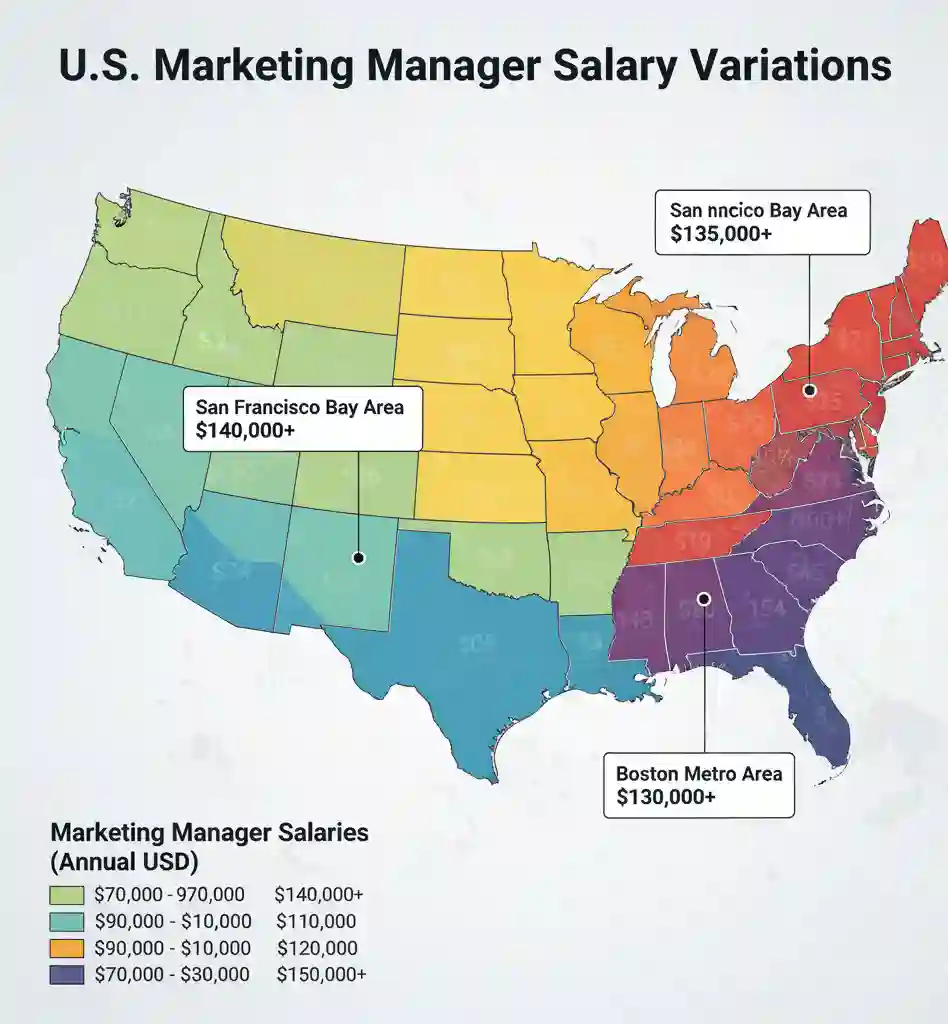
Marketing salaries demonstrate substantial regional variation across the United States, influenced by cost of living, concentration of industry headquarters, and local market competition.
Major Metropolitan Hubs:
-
San Francisco Bay Area: Marketing salaries typically run 18-25% above national averages, with senior digital roles often reaching the upper extremes of compensation ranges.
-
New York City: The country’s advertising and media capital offers salaries 15-22% higher than national averages, particularly for brand management and agency roles.
-
Boston, Los Angeles, & Washington D.C.: These markets typically pay 10-15% above average for marketing professionals.
Secondary Growth Markets:
-
Austin, Denver, & Seattle: Tech-focused cities offer salaries 5-12% above national averages, with particular strength in digital marketing roles.
-
Chicago & Atlanta: Major corporate headquarters in these cities support marketing salaries 8-12% above national averages.
Other Regional Markets:
-
Midwest & Southern Regions: Salaries in markets like Dallas, Minneapolis, and Charlotte typically align with national averages, while more rural areas may see compensation 7-15% below averages.
These geographic differentials increasingly reflect local cost of living indices, though premium markets continue to offer higher absolute compensation even after adjusting for expenses.
Experience and Career Progression Impact
Marketing compensation typically shows significant growth through the first 15 years of a career, with the most substantial increases occurring during promotions to management responsibilities.
Early Career (0-5 years): Professionals typically see salary growth of 40-60% from entry-level to specialist or early management roles, building foundational skills and industry knowledge.
Mid-Career (6-12 years): This period often brings the steepest compensation increases, with professionals advancing to senior individual contributor or management positions seeing earnings growth of 60-90% from their starting points.
Late Career (13+ years): Seasoned marketing professionals in director-level roles or higher typically earn 150-300% more than entry-level positions, with compensation growth increasingly tied to leadership scope and business impact.
The transition from individual contributor to people management typically brings a 20-35% salary increase, while moves from mid-level to senior leadership often come with 30-50% compensation jumps.
Specialized Skills and Certification Premiums
Certain marketing specializations command significant salary premiums due to high demand and limited talent supply.
High-Value Specializations:
-
Marketing Automation: Professionals with expertise in platforms like HubSpot, Marketo, or Salesforce Marketing Cloud typically earn 10-20% more than generalist peers at equivalent experience levels.
-
Data Analytics & SEO: Marketers with strong analytical capabilities and search engine optimization expertise command 15-25% premiums as organizations prioritize data-driven decision making.
-
Product Marketing: Specialists who bridge technical, product, and marketing teams typically earn 10-18% more than general marketing managers.
Certification Impact:
-
Digital Marketing Certifications: Google Analytics, Google Ads, and Facebook Blueprint certifications typically add 5-10% to salary offers for digital roles.
-
Professional Marketing Credentials: PMP® (Project Management Professional) and American Marketing Association certifications provide 8-12% salary advantages for management positions.
Industry-Specific Marketing Compensation
The industry sector significantly influences marketing compensation, with B2B technology and healthcare typically offering the highest packages.
Highest-Paying Sectors:
-
Technology & SaaS: Marketing professionals in these sectors earn 15-25% above cross-industry averages, with stock options often significantly enhancing total compensation.
-
Pharmaceuticals & Healthcare: Highly regulated industries offer 12-20% premiums for marketing roles requiring specialized therapeutic knowledge.
-
Financial Services & FinTech: Marketing roles in these sectors command 10-18% higher compensation than consumer goods positions.
Mid-Range Sectors:
-
Management Consulting & Professional Services: Marketing salaries typically range from 5-12% above national averages.
-
Manufacturing & Industrial: B2B marketing roles in these traditional sectors typically align with national averages.
Lower-Paying Sectors:
-
Non-Profit & Education: Marketing compensation in mission-driven organizations typically runs 10-20% below for-profit sector averages.
-
Retail & Hospitality: These consumer-facing sectors often pay 5-15% less than technology and healthcare marketing roles.
Additional Compensation Components
Beyond base salary, marketing professionals often receive substantial additional compensation elements that can significantly increase total earnings.
Performance Bonuses: Annual incentive compensation typically ranges from 5-15% of base salary for individual contributors, 10-25% for managers, and 20-50%+ for directors and above, tied to individual and company performance metrics.
Benefits Packages: Comprehensive benefits typically include health insurance (with employers covering 70-90% of premiums), retirement contributions with 3-6% 401(k) matching, and substantial paid time off ranging from 15-25 days annually.
Equity & Long-Term Incentives: Senior marketing roles in technology and startup environments often include stock options or restricted stock units (RSUs) that can add 15-100% to annual cash compensation.
Professional Development: Many organizations provide $2,500-$7,500 annually for conferences, courses, and certifications to support ongoing skill development.
Negotiation Strategies for Marketing Professionals
Effective negotiation can significantly impact marketing compensation, particularly for roles with variable pay components.
Research-Based Approach:
-
Benchmark roles using multiple salary data sources specific to location, industry, and company size
-
Quantify past achievements with specific metrics (campaign ROI, lead generation, revenue impact)
-
Understand the complete compensation package rather than focusing solely on base salary
Timing and Leverage:
-
Initiate salary discussions during performance reviews or after demonstrating significant value
-
Approach negotiations when you have competing offers or unique qualifications in high demand
-
Consider the broader context of the organization’s performance and compensation philosophy
Non-Salary Considerations:
-
Negotiate for professional development opportunities, additional vacation time, or flexible work arrangements
-
Seek clarity on performance bonus structures and equity vesting schedules
-
Request accelerated performance or compensation reviews (6 months instead of 12)
Future Outlook and Emerging Trends
The marketing profession continues to evolve, with several trends shaping future compensation patterns.
Growing Specialization: Demand for marketers with expertise in marketing automation, data analytics, and customer experience is expected to drive continued salary premiums for these specializations.
Remote Work Impact: The normalization of remote work is gradually reducing geographic salary differentials, though premium markets continue to offer higher absolute compensation.
Performance-Based Compensation: Organizations are increasingly tying larger portions of marketing compensation to measurable performance metrics and business outcomes.
AI Integration: While initially creating uncertainty, AI adoption is increasingly creating premium opportunities for marketers who can leverage these tools effectively, particularly in personalization and analytics.
Conclusion: Navigating Your Marketing Compensation Path
Marketing remains a financially rewarding career path in the United States, offering competitive salaries, clear advancement opportunities, and multiple specialization paths. By understanding the key factors that influence compensation—including role specialization, geographic location, industry sector, and demonstrated impact—marketing professionals can effectively navigate their career progression and compensation growth.
The most successful marketing professionals combine strategic thinking with measurable execution, continuously develop in-demand skills, and approach compensation discussions with well-researched confidence. Whether you’re early in your marketing career or an experienced leader, understanding these compensation patterns enables informed decisions about career moves, skill development, and negotiation strategies.
Official Data Sources: U.S. Bureau of Labor Statistics, MarketingSherpa, Professional Association for Marketing Excellence