The cybersecurity landscape in the United States is experiencing unprecedented growth and transformation. With increasing digital threats and evolving regulations, the demand for skilled cybersecurity professionals continues to outpace supply across all sectors. From financial institutions and healthcare organizations to government agencies and tech startups, businesses are actively seeking professionals who can protect their digital assets and infrastructure.
Cybersecurity offers one of the most promising career paths in today’s job market, combining competitive compensation with strong job stability. According to industry data, experienced cybersecurity professionals often command salaries ranging from $100,000 to $200,000, with leadership positions in major metropolitan areas reaching even higher compensation levels. This comprehensive guide provides a clear roadmap for building a successful cybersecurity career in the United States.
Understanding the Cybersecurity Profession
Cybersecurity professionals serve as guardians of digital information and systems. Their primary responsibility involves protecting organizations from cyber threats while ensuring business continuity and compliance with regulatory requirements. The field encompasses several specialized roles, each with distinct responsibilities and skill requirements.
Core Responsibilities Typically Include:
-
Designing and implementing security protocols and systems
-
Monitoring networks for security breaches and anomalies
-
Investigating security incidents and implementing response measures
-
Conducting vulnerability assessments and penetration testing
-
Developing and enforcing security policies and procedures
-
Ensuring compliance with industry regulations and standards
Successful cybersecurity professionals combine technical expertise with strong analytical thinking and communication skills. The ability to explain complex security concepts to non-technical stakeholders is particularly valued in the collaborative American business environment.
Essential Cybersecurity Skills for 2025
Technical Foundation
A strong technical foundation forms the cornerstone of any cybersecurity career. Essential technical skills include:
-
Network Security: Understanding network protocols, architecture, and defense mechanisms
-
Operating Systems Proficiency: In-depth knowledge of Windows, Linux, and Unix systems
-
Cloud Security: Expertise in securing cloud environments across AWS, Azure, and GCP platforms
-
Programming and Scripting: Python, PowerShell, or Bash for automation and tool development
-
Cryptography: Knowledge of encryption algorithms and implementation methods
Specialized Security Knowledge
Beyond foundational technical skills, cybersecurity professionals need specialized knowledge in:
-
Threat Intelligence: Analyzing emerging threats and attack vectors
-
Digital Forensics: Investigating security incidents and data breaches
-
Identity and Access Management: Implementing authentication and authorization systems
-
Security Frameworks: Applying NIST, ISO 27001, and CIS Controls effectively
Soft Skills for Career Advancement
Technical skills alone are insufficient for long-term career success. Essential soft skills include:
-
Analytical Thinking: The ability to analyze complex systems and identify vulnerabilities
-
Communication Skills: Clearly explaining security risks and recommendations to diverse audiences
-
Problem-Solving: Developing creative solutions to security challenges
-
Ethical Judgment: Maintaining integrity and making sound decisions under pressure
Educational Pathways to Cybersecurity
Traditional Degree Programs
Many cybersecurity professionals begin with formal education, including:
-
Bachelor’s Degrees: Computer Science, Information Technology, or Cybersecurity
-
Master’s Degrees: Advanced studies in Cybersecurity or Information Assurance
-
Doctoral Programs: Research-focused paths for academic or specialized roles
While degrees provide strong foundational knowledge, many successful professionals enter the field through alternative pathways, particularly in the pragmatic U.S. job market where demonstrated skills often carry significant weight.
Alternative Education Options
Several non-traditional pathways have proven effective for entering the cybersecurity field:
-
Cybersecurity Bootcamps: Intensive, focused training programs lasting 12-24 weeks
-
Online Courses and Certifications: Self-paced learning through recognized platforms
-
Military Training: Veterans often transition successfully using security skills gained in service
-
Apprenticeships: Structured learning while gaining practical experience
Certification Strategy for Career Advancement
Professional certifications play a crucial role in cybersecurity career development. They validate skills, demonstrate commitment to professional growth, and often fulfill requirement for specific roles.
Foundational Certifications:
-
CompTIA Security+
-
GIAC Security Essentials (GSEC)
-
Certified Ethical Hacker (CEH)
Intermediate Certifications:
-
CISSP (Certified Information Systems Security Professional)
-
CISM (Certified Information Security Manager)
-
CompTIA CySA+ (Cybersecurity Analyst)
Advanced Specializations:
-
GIAC Penetration Tester (GPEN)
-
Offensive Security Certified Professional (OSCP)
-
Certified Cloud Security Professional (CCSP)
Most professionals pursue a strategic combination of 2-3 core certifications aligned with their career goals, supplemented by occasional specialized credentials as needed for specific roles or technologies.
Building Practical Experience
Entry-Level Opportunities
Gaining initial experience represents the most challenging phase for many aspiring cybersecurity professionals. Effective strategies include:
-
IT Support Roles: Building foundational technical skills while seeking security responsibilities
-
Security Operations Center (SOC) Positions: Starting as an analyst to learn monitoring and incident response
-
Internships and Apprenticeships: Gaining exposure through structured programs
-
Volunteer Work: Assisting non-profits or small businesses with security needs
Skill Development Through Practice
Hands-on practice remains essential for developing cybersecurity capabilities:
-
Home Labs: Building virtual environments to test tools and techniques
-
Capture the Flag (CTF) Events: Participating in competitive security challenges
-
Open Source Contributions: Working on security tools and projects
-
Bug Bounty Programs: Identifying vulnerabilities in authorized systems
Job Search Strategies for Cybersecurity Roles
Resume and Portfolio Development
Effective application materials highlight both qualifications and practical abilities:
-
Quantifiable Achievements: Emphasizing specific security improvements implemented
-
Technical Skills Section: Clearly listing relevant tools, technologies, and methodologies
-
Project Portfolios: Documenting successful security initiatives and personal projects
-
Professional Summary: Concise overview of security expertise and career objectives
Networking and Community Engagement
The cybersecurity community offers valuable connections and learning opportunities:
-
Industry Conferences: Attending events like Black Hat, DEF CON, or RSA Conference
-
Local Meetups: Participating in regional security groups and chapters
-
Online Communities: Engaging in professional forums and social media groups
-
Professional Associations: Joining organizations like (ISC)², ISACA, or OWASP
Interview Preparation
Cybersecurity interviews typically assess both technical knowledge and problem-solving abilities:
-
Technical Assessments: Demonstrating hands-on skills through practical challenges
-
Scenario-Based Questions: Explaining approaches to hypothetical security situations
-
Behavioral Interviews: Discussing past experiences and decision-making processes
-
Case Studies: Analyzing and presenting solutions for complex security problems
Career Progression and Specialization
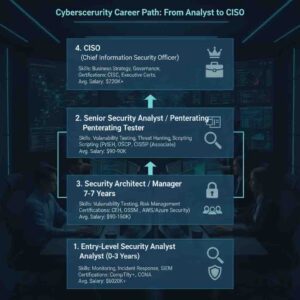
Typical Career Trajectory
Cybersecurity careers often follow a logical progression:
-
Entry-Level (0-2 years): Security Analyst, SOC Analyst, or Junior Penetration Tester
-
Mid-Career (3-7 years): Security Engineer, Incident Responder, or Security Consultant
-
Senior Level (8+ years): Security Architect, Lead Penetration Tester, or Security Manager
-
Leadership Positions: CISO, Security Director, or Principal Consultant
Emerging Specializations
The field continues to evolve, creating new specialization opportunities:
-
Cloud Security: Focusing on securing cloud infrastructure and services
-
IoT Security: Addressing unique challenges in connected devices
-
AI Security: Protecting machine learning systems and preventing adversarial attacks
-
Privacy Engineering: Implementing data protection and privacy-by-design principles
Future Trends in Cybersecurity
Staying current with industry developments ensures long-term career relevance:
-
Zero Trust Architecture: Shifting from perimeter-based to identity-centric security
-
Automation and AI: Leveraging machine learning for threat detection and response
-
Regulatory Evolution: Adapting to changing compliance requirements across states and industries
-
Remote Work Security: Addressing unique challenges of distributed workforce
Cybersecurity professionals who continuously update their skills and adapt to emerging technologies will remain valuable throughout their careers, particularly as digital transformation accelerates across all sectors of the American economy.
Conclusion: Building a Sustainable Cybersecurity Career
Establishing a successful cybersecurity career requires strategic planning, continuous learning, and practical experience. By following this roadmap—building foundational knowledge, developing specialized skills, earning relevant certifications, and gaining hands-on experience—aspiring professionals can position themselves for rewarding opportunities in this critical field.
The cybersecurity profession offers not just employment but a meaningful career protecting vital systems and information. For those with curiosity, persistence, and ethical commitment, cybersecurity represents one of the most promising professional paths in today’s technology landscape.
Official Data Sources: U.S. Bureau of Labor Statistics, National Institute of Standards and Technology (NIST), Cybersecurity and Infrastructure Security Agency (CISA)