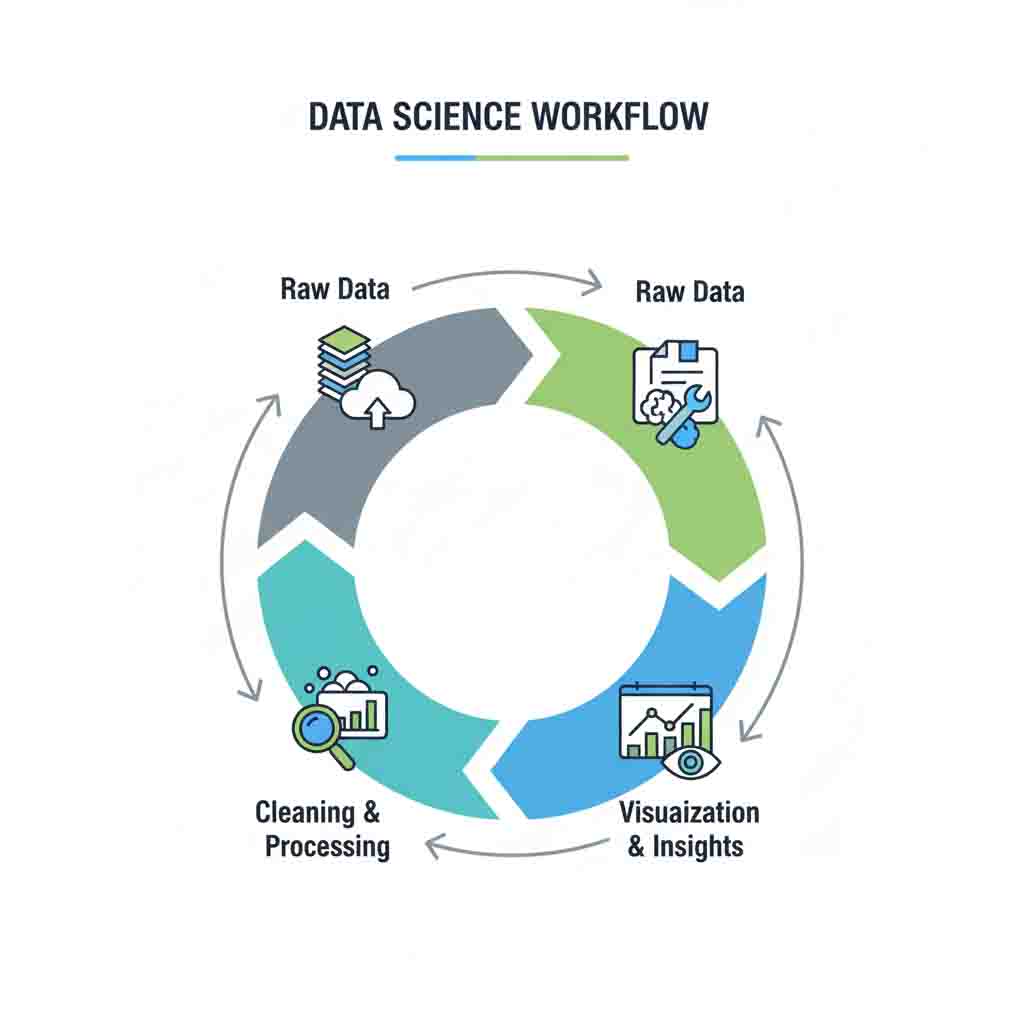
The demand for data scientists continues to grow across American industries, from healthcare and finance to technology and retail. These professionals transform raw data into actionable insights that drive business decisions, making them invaluable assets in today’s data-driven economy. With competitive salaries often exceeding $120,000 for mid-career professionals and abundant opportunities for advancement, data science represents one of the most promising career paths in the current job market.
This comprehensive guide outlines the education, skills, and strategies needed to launch a successful data science career in the United States.
Educational Pathways to Data Science
While data science requires substantial technical knowledge, multiple educational routes can lead to entry-level positions:
Traditional Degree Programs
Bachelor’s degrees in computer science, statistics, mathematics, or related fields provide the strongest foundation for data science careers. Many professionals enhance their qualifications with master’s degrees or PhDs, particularly for research-intensive roles. According to industry surveys, approximately 45% of data scientists hold master’s degrees, while 25% have PhDs.
Alternative Education Options
Coding bootcamps specializing in data science offer intensive training programs lasting 12-24 weeks. These programs focus on practical skills and often include career support services. Successful graduates demonstrate that focused, project-based learning can effectively prepare candidates for data science positions.
Self-Directed Learning
Many aspiring data scientists build their skills through online courses, textbooks, and personal projects. This approach requires exceptional discipline but offers maximum flexibility for career changers and those with non-traditional backgrounds.
Essential Technical Skills for Data Scientists
Data science requires proficiency across several technical domains:
Programming Languages
Python remains the dominant language in data science, with R serving as a secondary important language. Proficiency should include data manipulation libraries like Pandas and NumPy, visualization tools such as Matplotlib and Seaborn, and machine learning frameworks including Scikit-learn and TensorFlow.
Statistical Analysis and Mathematics
A strong foundation in statistics, probability, linear algebra, and calculus enables data scientists to select appropriate analytical methods, validate results, and avoid common pitfalls in interpretation.
Data Management and Manipulation
Data scientists must efficiently extract, clean, and transform data from various sources. This requires understanding database systems like SQL, along with techniques for handling missing data and outliers.
Machine Learning
Understanding machine learning algorithms—from basic regression models to advanced neural networks—separates competent data scientists from exceptional ones. Practical experience applying these techniques to real-world problems proves more valuable than theoretical knowledge alone.
Data Visualization and Communication
Creating compelling visualizations and clearly explaining technical findings to non-technical stakeholders represents a critical component of the role. Tools like Tableau, Power BI, or advanced visualization libraries help translate complex analyses into actionable business intelligence.
Building a Compelling Data Science Portfolio
A strong portfolio demonstrates your skills more effectively than any resume. Focus on creating diverse projects that showcase your technical abilities and problem-solving approach:
Portfolio Project Examples
-
Predictive models forecasting sales or user behavior
-
Natural language processing applications analyzing text data
-
Interactive dashboards visualizing key business metrics
-
End-to-end machine learning projects from data collection to deployment
Portfolio Best Practices
Include projects that address realistic business problems, document your process thoroughly, and highlight your ability to derive meaningful insights. Ensure your code follows best practices for readability and reproducibility, with clear documentation explaining your methodology and conclusions.
The Data Science Job Search Strategy
Resume and Online Presence
Tailor your resume to emphasize relevant technical skills and project experiences. Maintain an active GitHub profile with well-documented code repositories and a LinkedIn profile highlighting your data science accomplishments. Consider creating a personal website showcasing your portfolio projects and professional background.
Networking and Community Engagement
Participate in local data science meetups, conferences, and online communities. Contribute to open-source projects, compete in Kaggle competitions, and connect with professionals currently working in the field. These activities build valuable relationships while demonstrating genuine interest in data science.
Interview Preparation
Data science interviews typically include technical assessments covering statistics, programming, and machine learning concepts, along with case studies evaluating your problem-solving approach. Practice explaining your thought process clearly and concisely, focusing on how you would tackle business challenges using data-driven methods.
Career Advancement and Continuous Learning
Entry-level data scientists often begin as data analysts or junior data scientists before progressing to senior positions. With experience, professionals may specialize in machine learning engineering, analytics leadership, or data science management.
The field evolves rapidly, requiring continuous skill development. Successful data scientists stay current with emerging techniques, tools, and research through professional courses, reading research papers, and experimenting with new methodologies.
Data science offers a rewarding career path for individuals passionate about extracting insights from complex information. By developing strong technical foundations, building compelling project portfolios, and implementing strategic job search approaches, aspiring data scientists can position themselves for success in this dynamic field.
Data Source
U.S. Bureau of Labor Statistics, Kaggle Machine Learning & Data Science Survey