In 2025, the American workplace continues to evolve rapidly. With shifting economic conditions, the rise of remote work, and growing pay transparency, understanding salary trends is more critical than ever for professionals at every career stage. Whether you’re negotiating a new job offer, seeking a raise, or planning your long-term career path, data-driven insights can help you navigate the complex landscape of compensation.
This article breaks down the latest salary data, explores key factors influencing pay, and provides actionable strategies to ensure you’re earning what you’re worth.
The State of U.S. Salaries in 2025
Recent data reveals a nuanced picture of wage growth in the United States. As of the first quarter of 2025, the median weekly earnings for full-time wage and salary workers in the U.S. reached $1,194, which translates to an annual income of approximately $62,088. This represents a 4.8% increase from the previous year, signaling steady but cautious growth.
However, this growth is not uniform across the economy. Many workers feel their pay isn’t keeping up with rising costs. A recent survey found that 63% of job seekers believe salaries are lagging behind inflation. This perception persists even as more professionals engage in salary negotiations, with 37% of job seekers negotiating their pay in the past year—a significant increase from 29% in 2017.
How Key Factors Influence Your Earnings
Age and Career Stage
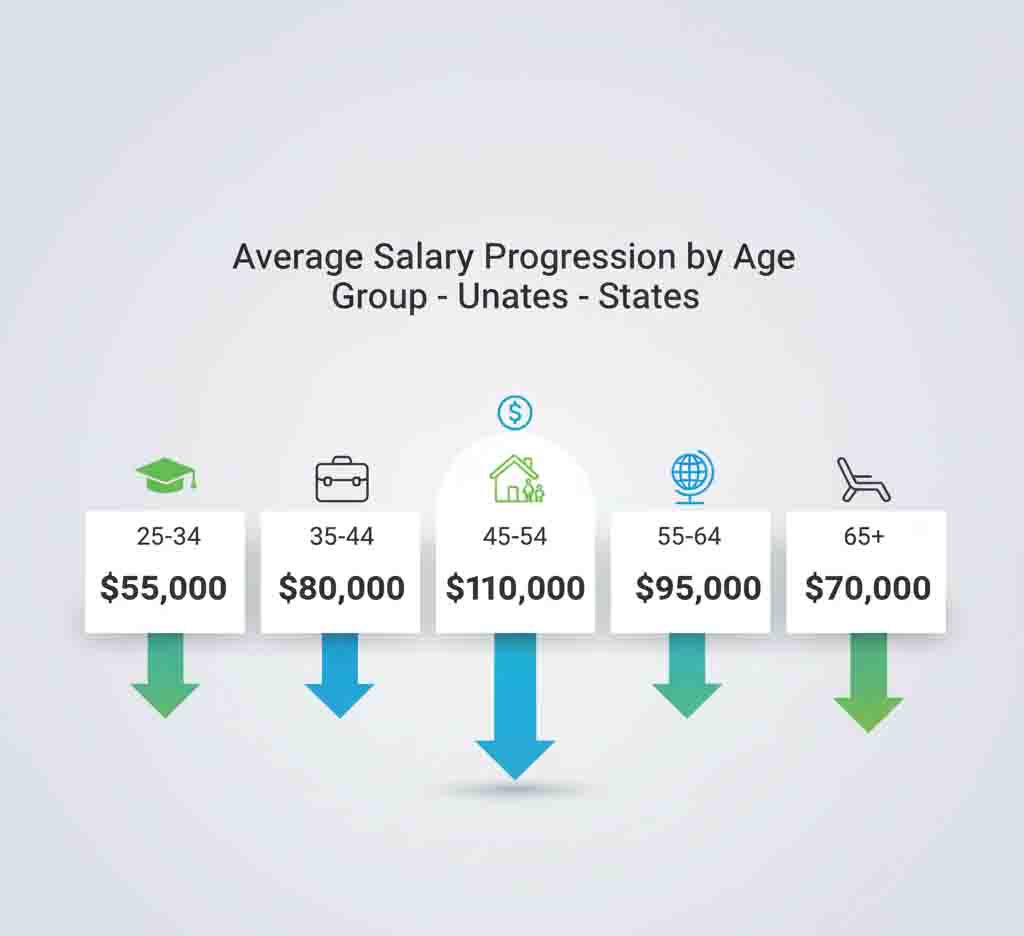
Salary progression in the U.S. typically follows a predictable arc, peaking in mid-career. Data from the U.S. Bureau of Labor Statistics illustrates this trajectory clearly-4:
-
20-24 years old: $41,184 per year
-
25-34 years old: $58,500 per year
-
35-44 years old: $69,264 per year
-
45-54 years old: $71,552 per year (peak earning years)
-
55-64 years old: $67,704 per year
-
65 and older: $63,544 per year
This pattern underscores the importance of career advancement and skill development during your prime working years. The peak earning window between 45-54 represents the culmination of experience, expertise, and often leadership responsibilities.
The Educational Dividend
Education remains one of the strongest predictors of earning potential in the United States. The wage premium for college graduates is substantial and enduring:
-
High school diploma only: $49,556 per year
-
Some college or Associate’s degree: $56,992 per year
-
Bachelor’s degree: $83,356 per year
-
Advanced degree: $101,972 per year
Workers with a bachelor’s degree earn approximately 68% more than those without any college education—a difference of about $33,800 annually. This educational dividend highlights the long-term financial return on investing in higher education.
That said, the transition from college to the workforce can present challenges. As of the second quarter of 2025, the unemployment rate for recent college graduates stood at 5.3%, with an underemployment rate of just over 41%. Underemployment, which refers to college graduates working in jobs that typically don’t require a degree, remains a persistent issue in the labor market.
The Remote Work Revolution and Compensation
The remote work landscape has stabilized in 2025, with significant variation across industries. Research from Barrero, Bloom, and Davis reveals the percentage of paid days worked from home in key sectors-1:
-
Professional & Business Services: Leading in remote work adoption
-
Information sector: Significant work-from-home presence
-
Finance & Insurance: Moderate remote work integration
-
Arts & Entertainment: Lower but notable remote work rates
This distribution reflects both the nature of work in these sectors and evolving corporate policies. While some companies have embraced remote work as a permanent option, others have implemented hybrid models or returned primarily to in-office work.

Navigating Salary Negotiation in 2025
The New Negotiation Landscape
Salary negotiation has become more common and transparent. Of those who negotiated their pay in the past year, 80% successfully received raises between 5-10%. This success rate should encourage more professionals to advocate for their worth.
Several factors are driving this trend:
-
Increased pay transparency in job postings
-
Decreased stigma around discussing compensation
-
Inflation concerns prompting workers to seek higher pay
-
Tools and data that make salary research more accessible
Actionable Negotiation Strategies
-
Research Industry-Specific Data
General salary information provides a starting point, but industry-specific and role-specific data is crucial for meaningful negotiations. Use multiple sources including government data, industry surveys, and salary platforms to build your case. -
Highlight Your Unique Value
Beyond your job description, emphasize specific skills, certifications, and accomplishments that justify higher compensation. Quantify your impact whenever possible—cite projects you’ve led, revenue you’ve generated, or efficiencies you’ve created. -
Consider the Total Compensation Package
Salary is just one component of your earnings. In 2025, 58% of job seekers rank healthcare benefits as very important, while 49% value retirement plans like 401(k) programs highly-8. Sometimes, a lower base salary with exceptional benefits can yield greater long-term value. -
Time Your Request Strategically
The best moments to negotiate include:-
When receiving a job offer
-
During performance review cycles
-
After successfully completing significant projects
-
When taking on additional responsibilities
-
Looking Ahead: The Future of Compensation
Wage growth projections for 2025 suggest continued moderation, with employers budgeting average increases of 3.5% to 3.9%. While this represents a slight slowdown from the peaks seen during the post-pandemic recovery, it aligns with longer-term historical averages.
At the same time, pay equity initiatives are gaining momentum. Approximately 70% of employers plan to conduct compensation adjustments to ensure fair pay across their organizations. This focus on equity may help address persistent wage gaps, particularly for historically underrepresented groups.
Conclusion: Taking Control of Your Financial Future
Understanding salary trends represents the first step toward maximizing your earning potential. In today’s environment, successful professionals combine this knowledge with strong negotiation skills and awareness of emerging workplace trends like remote work.
By leveraging data, clearly articulating your value, and understanding the complete compensation landscape, you can make informed decisions that advance both your career and financial wellbeing. Remember that your salary journey is just that—a progression that evolves with your experience, skills, and strategic career moves.
Official Data Sources: U.S. Bureau of Labor Statistics, Federal Reserve Bank of New York, Federal Reserve Economic Data (FRED)